Archive for the 'Photo Books' Category


Bryan Formhals / LPV Magazine 0

While I keenly follow Bryan Formhals’ LPV Magazine as well as its various online incarnations, I only recently discovered that it also exists as a terrific print magazine. There aren’t many publications on actual paper nowadays that showcase a photographer’s output as lucidly or generously; in the latest issue (#3), the four featured photographers — Ed Panar, Hannah Pierce-Carlson, Shane Lynam and Tommy Forbes — are each allotted 12-16 pages to shine. Every issue of LPV is based around a loose theme, and each issue so far has had a unique tone guided by Bryan’s searching sensibility.

The same wayfaring spirit is evident in Medicine, a new zine featuring Bryan’s own photographs and published by San Francisco’s legendary Hamburger Eyes. This collection – made between 2006-2007 in Los Angeles – is a series of epiphanies encountered along Melrose and Hollywood, up and down La Brea and Fairfax and on the scorched boardwalks of Venice and Santa Monica beaches. The pictures are particularly evocative to me since I was on the very same beat at the time, mining those torturously untwisted paths for hours on end when saner minds would surely have packed it in. Why “Medicine,” Bryan? If you were out looking for a cure, my guess is that there isn’t one, not for the likes of us.

You can buy LPV Magazine here and order Medicine here.

“Obsessed” by Sun Yanchu (Jia Za Zhi) 0

© Sun Yanchu

My friend Yuan Di runs Jia Za Zhi — one of the most beautiful photography blogs in the entire universe.

Last year Jia Za Zhi moved from online publishing to the real thing and put out a book of Sun Yanchu’s striking black and white photographs called “Obsessed”.

Sun’s work manages to appear free and furtive at the same time.  His photographs are infused with a sense of abandon even though he seems to have been crouching in the shadows. The book is relentlessly paced and the images come across like a barely remembered hallucination.

You can order “Obsessed” online at Bananafish. I understand that there aren’t too many copies left. For more information, and to see some spreads from the book, please click here.

SHIBUYA in 2011 PDN Annual 0

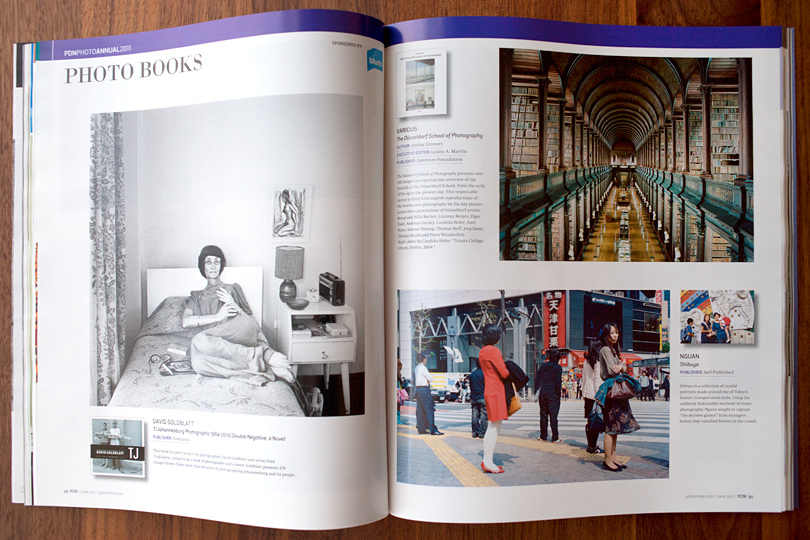
I’m honoured that the 2011 PDN Photo Annual has selected SHIBUYA as one of the best photo books of the year.

GE11: We Were There 0

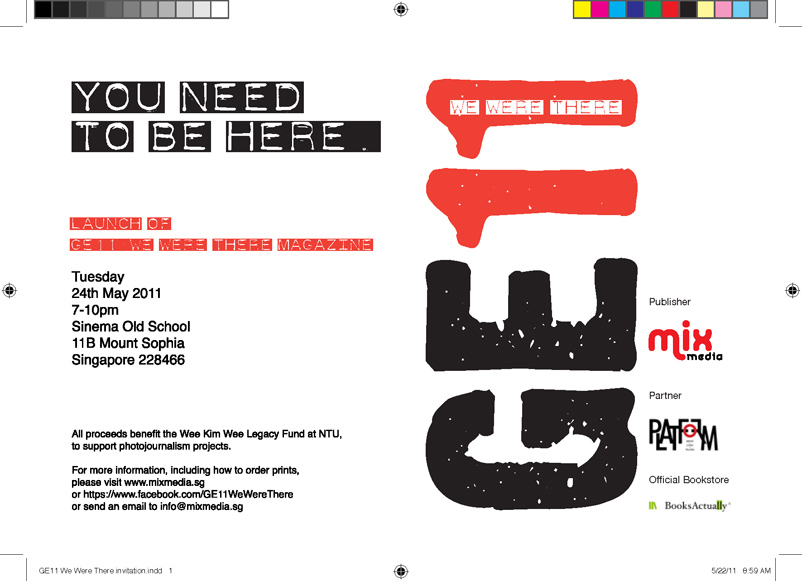
Many thanks to Darren Soh, Tay Kay Chin and Cherian George for including my work in GE11: We Were There, a magazine featuring pictures of Singapore’s recent landmark elections by some of the country’s best photographic talent.  The publication launches on Tuesday night at Sinema Old School.

N.B. This magazine is now available as an iPad app.

SHIBUYA video flip-through 0

Here is a partial look inside SHIBUYA, courtesy of The Telegraph and Self Publish, Be Happy.  Thanks guys!

Yukina Kinoshita 0

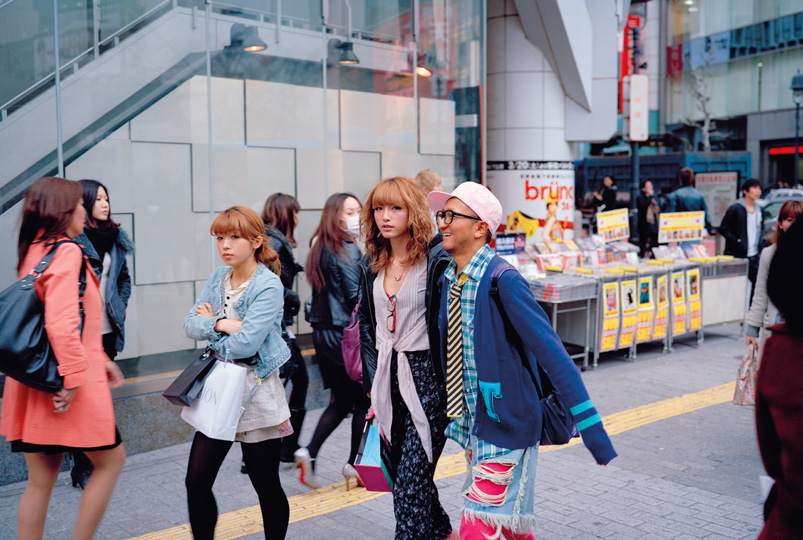
I sometimes tell myself that I’m a breed of paparazzo whose job is to buzz around ordinary folk instead of celebrities.  SHIBUYA is about regular people making their way in the big city.  To my surprise, however, someone recently identified the central figure in this picture from the book as the well-known Japanese “idol” Yukina Kinoshita.

SHIBUYA 0

I’m excited to announce that my book SHIBUYA, a collection of unposed “portraits” taken around Shibuya station in Tokyo, is finally ready.  Get your copy here!

Paul Fusco: RFK 0


Paul Fusco’s “RFK” is my favorite photo book of the year.  On June 8th 1968 a train carried Robert F. Kennedy’s body from New York to Washington DC.  Up to a million people lined the tracks along the route as they waited for a glimpse of the train and a chance to pay their last respects.  Fusco, then working for Look magazine, was a passenger on board and snapped hundreds of pictures from the train as it sped past the onlookers.  These photos have just been collected into a handsome volume by Aperture and contain many shots unpublished in the project’s two previous incarnations.


The book’s sombre context imbues “RFK” with a powerful sense of heartbreak, but the individual photos are about so much more than the impact of the man or his assassination.  As I flipped through “RFK,” examining each of the figures along the tracks and studying their expressions, gestures and dress, my overwhelming reaction was not sorrow but wonder.  Yes, there are women kneeling in prayer,  proud military men in salute and mourners hysterical with tears.  But mostly the pictures show the ordinary man, woman or child simply returning the gaze of the photographer with a delightful variety of reactions.  There are scowling nuns, smiling nuns, curious kids in swimsuits, families on lawn chairs, men in full baseball uniforms, video camera-toting retirees.  A family stands in a straight line, from tallest to shortest.  Dozens joyously wave flags as if it were the Fourth of July.  By the end of the book , as the funeral train approached its destination and the figures in the photographs become abstract blobs of color in the fading light,  it’s clear that by covering the circumstances following a senseless death Fusco has created a shimmering work about the living, and life itself.